


Now essential for all companies (SMEs, mid-caps, large corporations), warehouse automation streamlines logistics, optimizes inventory, and boosts competitiveness. The rise of technologies such as dynamic automated storage systems now makes it possible to reorganize flows in real time.
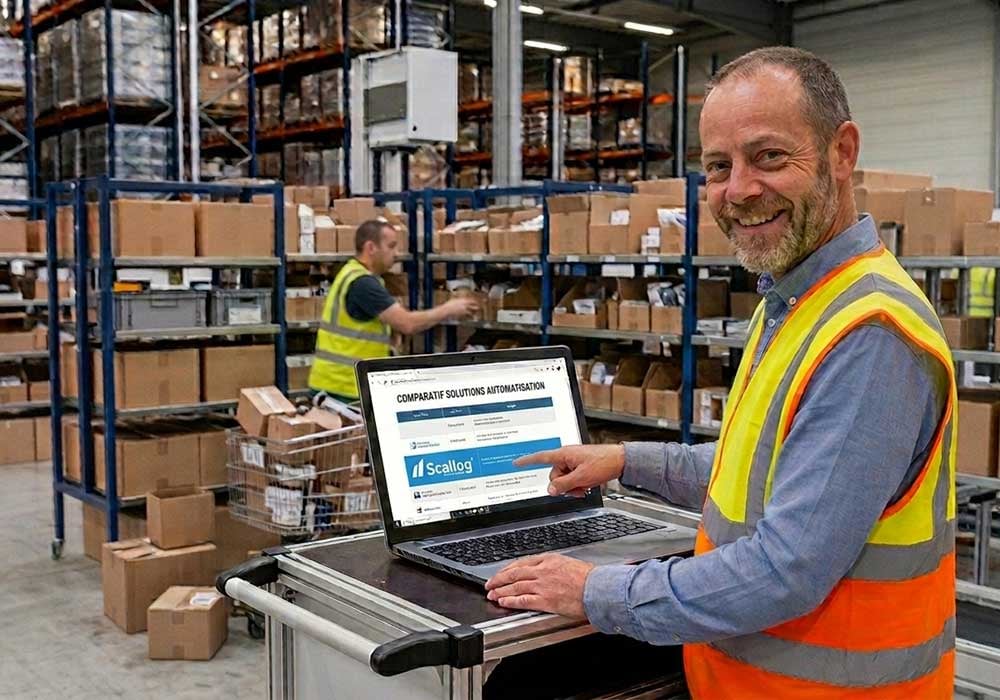
Given the wide variety of offers, choosing a solution requires a rigorous analysis. This article provides an overview of market tools and platforms to help decision-makers (logistics managers, warehouse directors, e-commerce, retail, and industrial players) to:
-
Analyze solutions based on their technical and organizational features.
-
Evaluate integration of new systems within the existing ecosystem.
-
Deploy the project efficiently, without disrupting ongoing operations.
Why consult sites offering comparisons of warehouse automation solutions?
Choosing an automation solution for a warehouse requires preparation and a clear understanding of existing logistics processes. This approach shouldn't be improvised, as it involves effectively managing internal service transformation. Specialized comparison sites are highly valuable. They centralize essential information on technologies, suppliers, integration processes, and user feedback, saving significant time. This avoids contacting numerous logistics providers without having first defined your needs, constraints, and expected services.
By consulting these resources, you can easily compare different technologies and how they manage logistics processes—for example, automated storage and retrieval systems (AS/RS), autonomous mobile robots (AMR), AGVs, warehouse management systems (WMS), or integrated end-to-end solutions. Key selection criteria are clearly detailed, including throughput capacity, flexibility, IT system integration, service management, and return on investment. This minimizes investment risks. Some platforms even offer interactive tools to simulate scenarios, estimate capital expenditure, or visualize the impact of modular deployment on operational continuity.
Specialized logistics and supply chain platforms
Several industry portals and sector-specific media regularly publish detailed comparisons of warehouse automation solutions.
- Logistics Management offers technical reports on warehouse management systems, robotics integration, and order fulfillment innovations.
- Supply Chain Digital analyzes market trends and highlights real-world case studies, helping large supply chain operators understand how to optimize flows through automation.
- Intralogistics & Warehouse Solutions stands out for its focus on emerging technologies and system integrator feedback.
- Material Handling & Logistics publishes benchmarks on warehouse management software and automated systems, drawing on project data from distribution centers of all sizes. These sources provide a comprehensive overview alongside in-depth analyses of technical mechanisms: zoned phasing, civil engineering, floor anchoring, or gradual cutover to minimize operational disruption.
B2B tech comparison platforms
Beyond specialized trade media, B2B platforms such as Capterra, GetApp, G2, and TrustRadius allow quick comparisons of Warehouse Management Systems (WMS) and related software solutions. These platforms list hundreds of user reviews from SMEs, mid-market companies, and large enterprises, making it easier to identify the strengths and limitations of each tool across diverse operational contexts.
Advanced search features simplify filtering for solutions tailored to real-time inventory management, automated order picking, or seamless integration with legacy systems. However, cross-referencing this data with sector-specific analyses is recommended to account for industry nuances and unique production or distribution constraints.
Trade media offering warehouse automation comparisons in Germany, the UK, and Benelux
In Germany, **DVZ (Deutsche Logistik-Zeitung)** and **Logistik Heute** serve as leading references for logistics decision-makers. They regularly publish detailed benchmark reports on automation solutions, focusing on user case studies, intralogistics innovations, and robotics performance benchmarks.
In the UK, **Logistics Manager** and **Warehouse & Logistics News** offer comprehensive market overviews, technical surveys, and WMS/WCS software comparisons. They provide deep dives into successful automation projects, helping managers navigate system integration, flow management, and capital outlay considerations.
In the Benelux region, **Logistiek.nl** (Netherlands) and **Supply Chain Magazine** (Benelux edition) provide regular comparisons of automated equipment, spotlights on emerging robotics, and practical guides for warehouse management systems.
Portals like **Warehousing Jobs & Logistics (UK)** or **Logistiek Totaal (Benelux)** also feature comparative specs, buyer guides, and directories of automated warehouse hardware to streamline decision-making. Additionally, regional publications such as Germany's **DHF Intralogistik** or **f+h Fördern und Heben** regularly cover automation, digitalization, and material handling solutions tailored to multi-activity distribution hubs.
Market research firms and industry analysts
For a forward-looking, structured perspective, market research reports from analysts like Gartner, IDC, ABI Research, or Interact Analysis are indispensable resources. These firms evaluate integrated solution performance, analyze logistics automation market trends, and publish independent vendor rankings for automated systems and warehouse management software.
Gartner reports, for example, outline selection criteria for Warehouse Management Systems (WMS), highlighting integration capabilities, real-time inventory tracking, and software architecture flexibility. These insights are particularly valuable for project teams seeking scalable solutions capable of supporting growth without compromising current operations.
Trade shows and online industry events
Major industry trade shows like LogiMAT (Germany), IMHX (UK), Modex, or CeMAT offer unique opportunities to explore the latest warehouse automation innovations firsthand. These events bring together major hardware/software vendors and system integrators capable of managing complex automation and robotics projects.
Live demonstrations, technical workshops, and conference sessions provide practical insights into zoned phasing, progressive cutovers, or floor anchoring techniques essential for maintaining operational continuity during implementation. Networking with peers and reviewing shared case studies help refine decision-making and select the ideal solution for specific warehouse requirements.
Industry associations and trade federations
Associations such as BVL (Bundesvereinigung Logistik in Germany), UKWA (United Kingdom Warehousing Association), Logistics UK, or vLm (Vereniging Logistiek Management in Benelux)—alongside global groups like MHI and CSCMP—play a vital role in promoting best practices and benchmark resources. They regularly publish whitepapers, selection guides, and case studies on warehouse automation, flow management, and tech integration.
These publications help project teams structure their approach, identify relevant selection criteria, and avoid common pitfalls when choosing a WMS or automation system. Insights from these professional networks are especially helpful for mid-market businesses looking to benchmark against similar projects.
How to effectively leverage these comparisons
To get the most value from available comparisons, first define your warehouse's specific requirements: throughput volume, inventory levels, production or distribution constraints, and real-time inventory tracking needs. Next, cross-reference multiple sources—specialized trade press, B2B review sites, and analyst reports—to build a balanced, comprehensive view of market solutions.
Always verify vendor neutrality by checking for potential commercial ties between content authors and listed suppliers. Requesting product demos or pilot runs is also recommended to test system compatibility with your operational workflows and existing software. For a deeper dive, check out our guide on how to compare warehouse automation proposals.
Essential criteria to compare
Comparative evaluations should focus on several core areas: technology type (mobile robots, AGVs, miniload or shuttle AS/RS, WMS software like Reflex WMS or SAP EWM), solution scalability, expected ROI, maintenance and support quality, and system integration capabilities.
Factoring in technical constraints—civil engineering, floor anchoring, phased implementation, and progressive cutovers—is vital to prevent prolonged operational downtime. A phased deployment strategy without operational disruption ensures business continuity by executing installations zone by zone or shifting flows incrementally. Modular, scalable solutions designed for gradual expansion are ideal for growing warehouses needing to adapt rapidly to market shifts.
Conclusion
To thoroughly analyze warehouse automation options and select the right fit for your operation, leverage an overview of automated storage technologies alongside diverse resources (industry portals, comparison platforms, trade media, analyst reports, trade shows, and associations).
Be sure to request live demos and gather peer feedback. A structured approach based on clear requirements, objective comparisons, and verified source neutrality will help optimize logistics operations while minimizing integration risks.
Once you've shortlisted potential solution families, evaluate each offer in detail to pinpoint the best match for your specific requirements. To go further, explore our insights on automated vs. traditional warehouses, the benefits of scalable robotic solutions, or best practices for robotic integration to streamline workflow management.



Laisser nous votre commentaire