


Automating a warehouse without stopping operations requires a phased approach. While choosing the right system is key, phasing by zone, a gradual transition, and team coordination are just as critical. Through this approach, you can optimize your logistics processes while maintaining a continuous flow of goods, building the foundation for long-term improvements in productivity, safety, and stock availability.
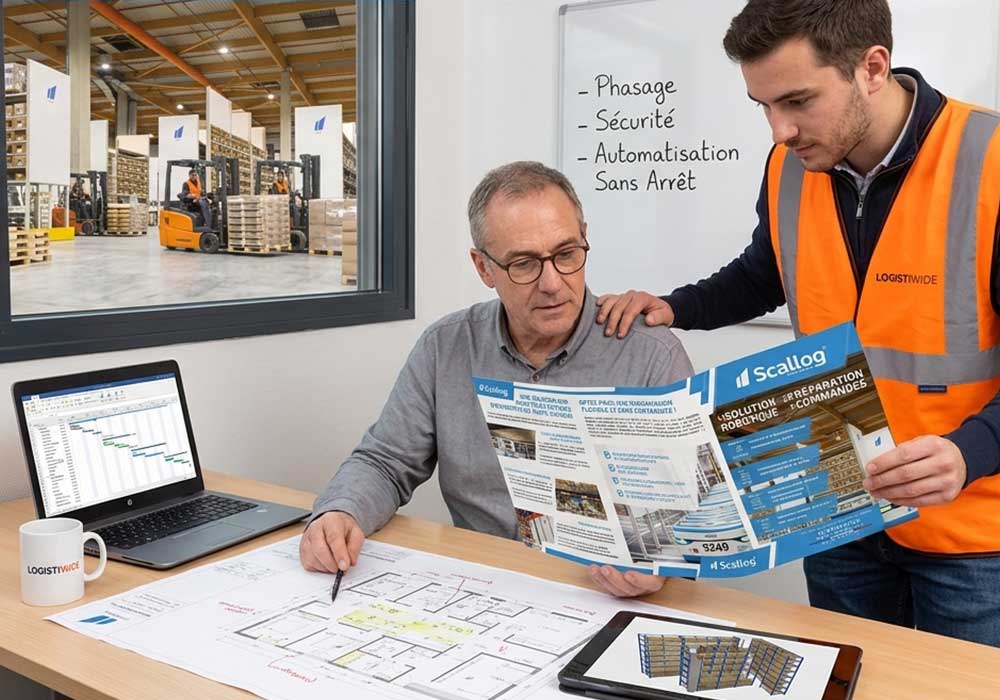
Why Certain Automation Projects Cause Operational Disruptions
Integrating new automation technology can temporarily paralyze parts of a warehouse when major civil engineering work is required. Floor anchoring, structural foundations, network updates, conveyor installations, and altered traffic paths can render specific zones inaccessible. Moving inventory, pallets, and material handling equipment inherently disrupts overall supply chain flows.
This challenge is not unique to a single technology. Fixed systems can suit companies seeking maximum storage density, provided they can plan for long installation times and dedicate specific areas. Conversely, mobile robotics reduce construction needs and easily integrate into existing facilities. The goal is to weigh construction constraints against core operational priorities: business continuity, storage capacity, order preparation, and future scalability.
Comparing Automation Systems by Operational Impact
| System Type | Required Construction | Operational Impact | Installation Timeframe | Zoned Phasing |
|---|---|---|---|---|
| Fixed Conveyor Systems | Civil engineering, floor anchoring, utility networks, and traffic flow redesign | Potential shutdown of affected areas | Varies based on project scale | Feasible if workflow paths are segregated |
| Building-Integrated Automated Storage | Structural reinforcement, utility connections, and workstation adaptations | Impact concentrated around the installation area | Varies depending on installation type | Feasible with detailed planning |
| Mobile Robotic Systems | Minimal work, primarily electrical and IT infrastructure | Operations continue normally in unaffected zones | Phased rollout according to selected scope | High zoned deployment capacity for maximum efficiency |
This table does not highlight a single best solution for every scenario. Instead, it helps weigh actual site constraints, transformation costs, and expected ROI. The difference between an automated warehouse and a traditional warehouse lies heavily in operational flexibility and the ability to maintain logistics activities during installation.
How Modular Deployment Prevents Warehouse Downtime
To successfully automate warehouse operations, modular deployment follows a straightforward principle: automate an initial zone, bring it online, and expand the system without disrupting overall workflows. Mobile robots are added incrementally, while workstations, mobile shelving, and warehouse control software are integrated based on operational priorities.
This structure allows manual storage operations to continue during installation. Urgent orders keep moving while the automated system handles specific product categories, picking tasks, or fast-moving items. Operators temporarily work in a hybrid mode until full transition is achieved.
SCALLOG's solution fits seamlessly into this model. Autonomous mobile robots deliver goods directly to operators, cutting down walk times and picking errors. Real-time software management ensures full visibility over inventory and tasks. This strategy allows businesses to integrate a deployable robotic solution without retrofitting the entire facility, boosting picking efficiency and traceability.
Key Steps to Phase an Automation Project
- Analyze Workflows. Operations managers analyze incoming goods, storage, replenishment, picking, and shipping. They identify high-priority inventory, sensitive areas, and peak availability periods.
- Divide the Warehouse into Zones. Phasing must isolate active work areas without blocking adjacent traffic routes. A designated zone may group high-turnover SKUs or items best suited for automated storage.
- Prepare for a Phased Cutover. Interfaces with the WMS, management tools, and control processes must be thoroughly tested before launch. Safety rules, access points, and traffic paths are pre-validated.
- Train Site Teams. Operators learn to use workstations, robots, and management tools. Training takes place alongside daily operations using realistic scenarios for replenishment, order picking, and exception handling.
A well-planned project doesn't just aim to speed up installation; it ensures continuous material flow, maintains high productivity, and mitigates operational risks at every stage.
The True Cost of Facility Downtime During Construction
The cost of operational downtime extends far beyond construction expenses. A temporary drop in activity can lead to delayed shipments, lost throughput capacity, reliance on temporary buffer areas, overtime expenses, rerouted transport, and decreased customer satisfaction. These factors must be factored into total initial investment and ROI calculations.
Exact numbers related to downtime, installation timelines, and anticipated gains should be confirmed with SCALLOG, as they depend on the site, inventory volume, system interfaces, and selected level of automation. The core metric isn't just technology cost—it's total project cost balanced against operational continuity, productivity, and scalability.
How SCALLOG Supports Zero-Downtime Deployment
SCALLOG provides automated, robotic systems built around mobile robots and dynamic shelving units. The solution is designed to integrate into existing warehouse layouts—under racks or on mezzanines—minimizing heavy civil works.
Its modular structure makes it easy to scale storage and picking capacity as your logistics needs evolve. Real-world examples, such as relocating a 30,000-location storage zone in under 3 hours, showcase this adaptability.
Deployments conducted in active warehouse environments span across e-commerce, industrial manufacturing, retail distribution, and pharmaceuticals. The solution helps densify storage without expanding physical building footprints whenever facility layouts permit.
FAQ
What is the average timeline for a zoned deployment?
There is no universal timeline. The schedule depends on the number of zones, software interfaces, electrical requirements, SKU volumes, and chosen cutover speed. A reliable timeline is established after completing a full workflow audit.
Is the system compatible with 24/7 warehouse operations?
Yes, phasing can be structured around continuous operations. Construction is scheduled within isolated work zones, dedicated maintenance windows, and strict safety protocols. Compatibility is confirmed based on individual site constraints.
What are the primary operational risks during installation?
Key risks include traffic congestion, multi-team co-activity, inventory discrepancies, power interruptions, or WMS integration delays. Rigorous testing, close monitoring, and clear manual fallback procedures effectively mitigate these risks.
How should team training be handled?
Training combines practical demonstrations, hands-on workstation exercises, and live support during early operations. Teams learn to operate robots, verify inventory, and handle system exceptions. You can also review automated material handling best practices to prepare teams for the transition.



Laisser nous votre commentaire